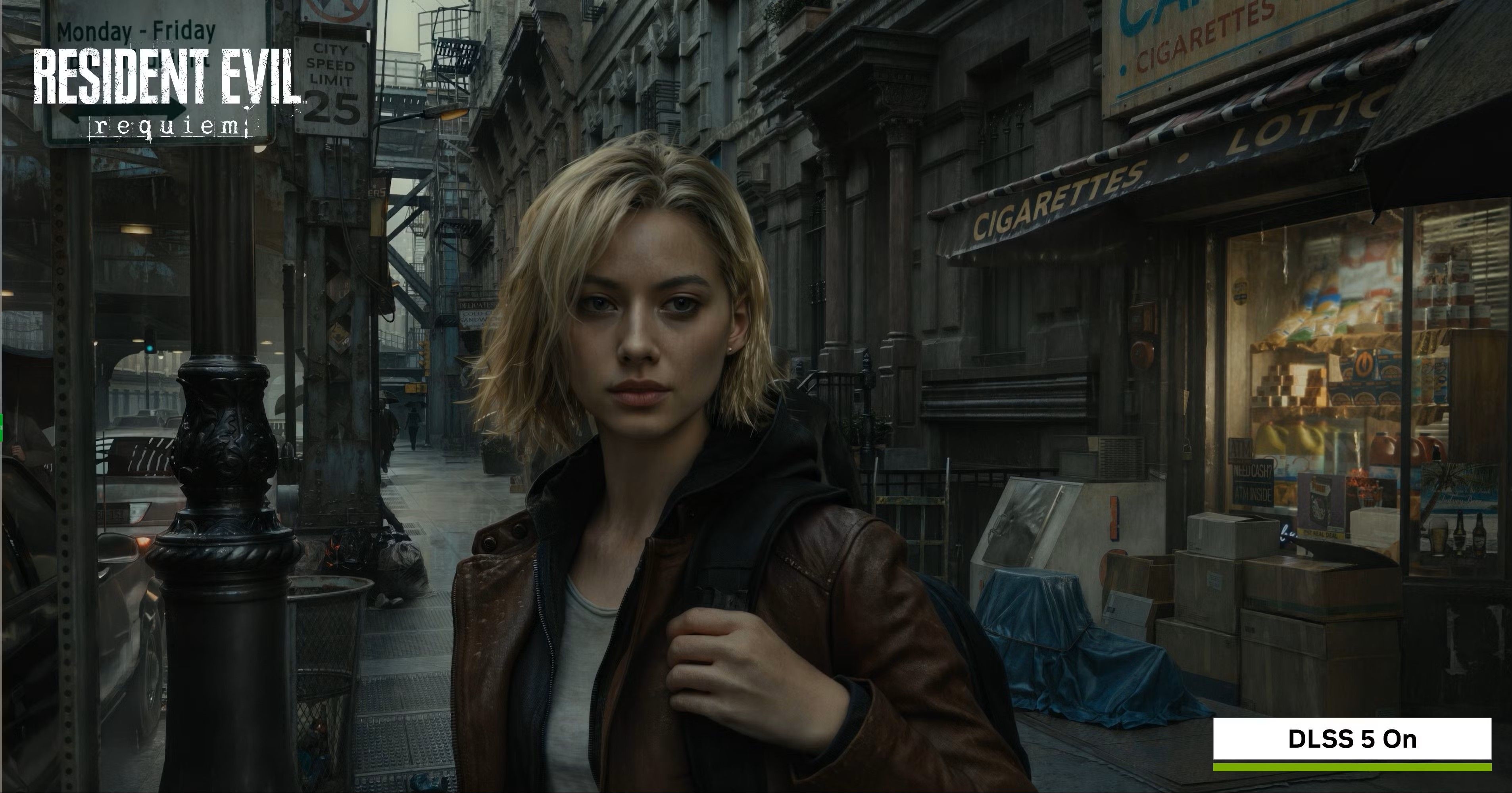
DLSS 5 Feels Like a Turning Point — and Not in a Good Way
I’ve spent the better part of the last few years defending technologies like DLSS. When it works, it really works. It can transform otherwise unplayable games into smooth, responsive experiences without completely sacrificing image quality. It always felt like a smart compromise rather than a shortcut.
But DLSS 5 feels like something else entirely.
This time, it’s not just about performance. It’s about fundamentally changing how games look, feel, and present themselves. And the more I’ve seen of DLSS 5, the harder it’s been to ignore an uncomfortable realization: what was once enhancement is starting to look a lot like replacement.
From Reconstruction to Reinvention
DLSS began as a clever workaround — render at a lower resolution, then use AI to upscale the image while preserving as much detail as possible. Over time, it evolved with features like frame generation and more advanced reconstruction techniques.
But through all of that evolution, one principle stayed consistent:
Approximate the original image as closely as possible.
That philosophy now appears to be broken.
At GTC 2026, Nvidia unveiled DLSS 5, and with it, a major shift. Instead of reconstructing what’s already there, DLSS now actively reinterprets scenes in real time. Lighting is rebalanced. Materials are altered. Faces can subtly — or not so subtly — change.
And naturally, people noticed.
“AI Slop” Isn’t Just a Meme
Across forums, developer discussions, and video breakdowns, the reaction has been uneasy. The term “AI slop” gets thrown around a lot, but beneath the exaggeration is a legitimate concern:
If the final image isn’t what the game actually rendered, what are we really looking at?
This isn’t just upscaling anymore. It’s creative intervention.
The Motion Smoothing Comparison — and Why It Falls Short
It’s tempting to compare DLSS 5 to motion smoothing — the infamous “soap opera effect” on TVs. There’s definitely a shared vibe: overly processed visuals, unnatural smoothness, and that slightly “off” feeling.
But the comparison only goes so far.
Motion smoothing interpolates frames, but it doesn’t fundamentally change the underlying image. You can turn it off and return to the original content.
DLSS 5 doesn’t offer that same safety net.
When the Tech Starts Working Against Itself
Early demonstrations show that DLSS 5:
- Requires extreme hardware (reportedly even dual RTX 5090 setups)
- Struggles with motion clarity despite its ambitions
- Introduces visual inconsistencies like shifting shadows and unstable highlights
- Applies an oddly polished, almost artificial look to characters
Ironically, while environments and lighting often look better, the overall image can feel less authentic.
And that’s the core issue.
The Real Problem: Losing the Ground Truth
DLSS used to be about preserving intent — delivering better performance while staying faithful to what developers created.
DLSS 5 challenges that idea.
When AI starts altering materials, lighting, and even facial details, the concept of a “ground truth” image begins to disappear. What you’re seeing is no longer just the game — it’s the game filtered through an AI interpretation layer.
And for many, that crosses a line.
Final Thoughts
There’s no denying the technical achievement here. DLSS 5 is impressive in what it can do. But the question isn’t just about capability anymore — it’s about direction.
Is this still a tool for enhancing games, or is it becoming something that overrides them?
Because if we’re no longer seeing what the game actually renders, then the conversation shifts entirely.
And not necessarily for the better.
Written by
Rahul Roy
Software Engineer & Mobile Developer